EV 3 and 3.5
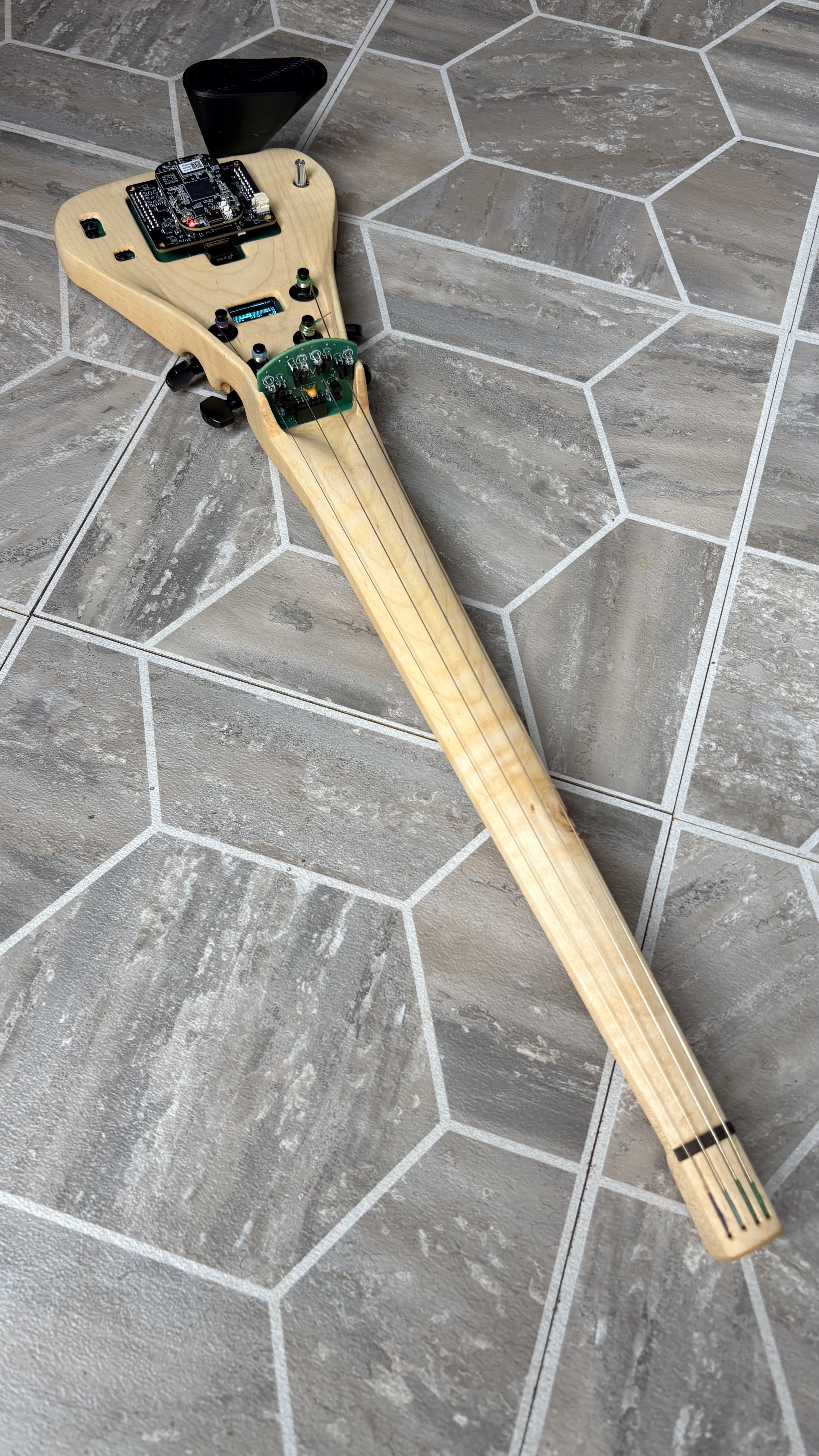
EV 3 continues my exploration of merging the embodied nuance of string performance with the flexibility of digital synthesis. Built around four independent infrared pickups and four Bela Minis communicating over UART, the instrument responds directly to the player’s physical input in real time. Its CNC-cut maple body integrates electronics and acoustics, while a mobile-based interface enables on-device programming without a laptop. The system’s FFT convolution engines, pitch-tracking, and modular synthesis pipeline allow EV 3 to move fluidly across tunings, timbres, and musical traditions, creating a hybrid expressive space for string players.
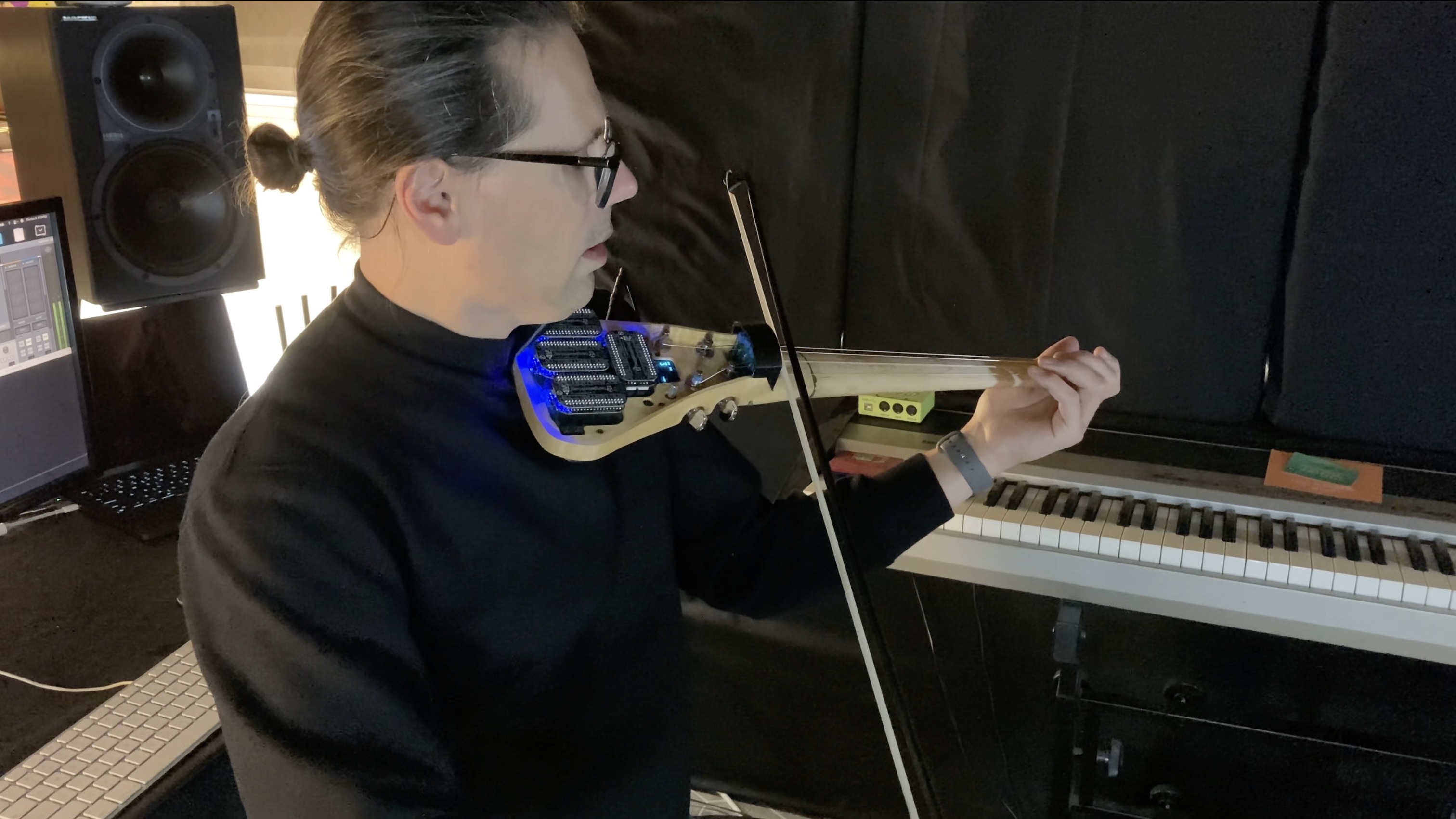 EV 3 featuring a CNC-cut curly maple body and 4 Bela minis for onboard processing
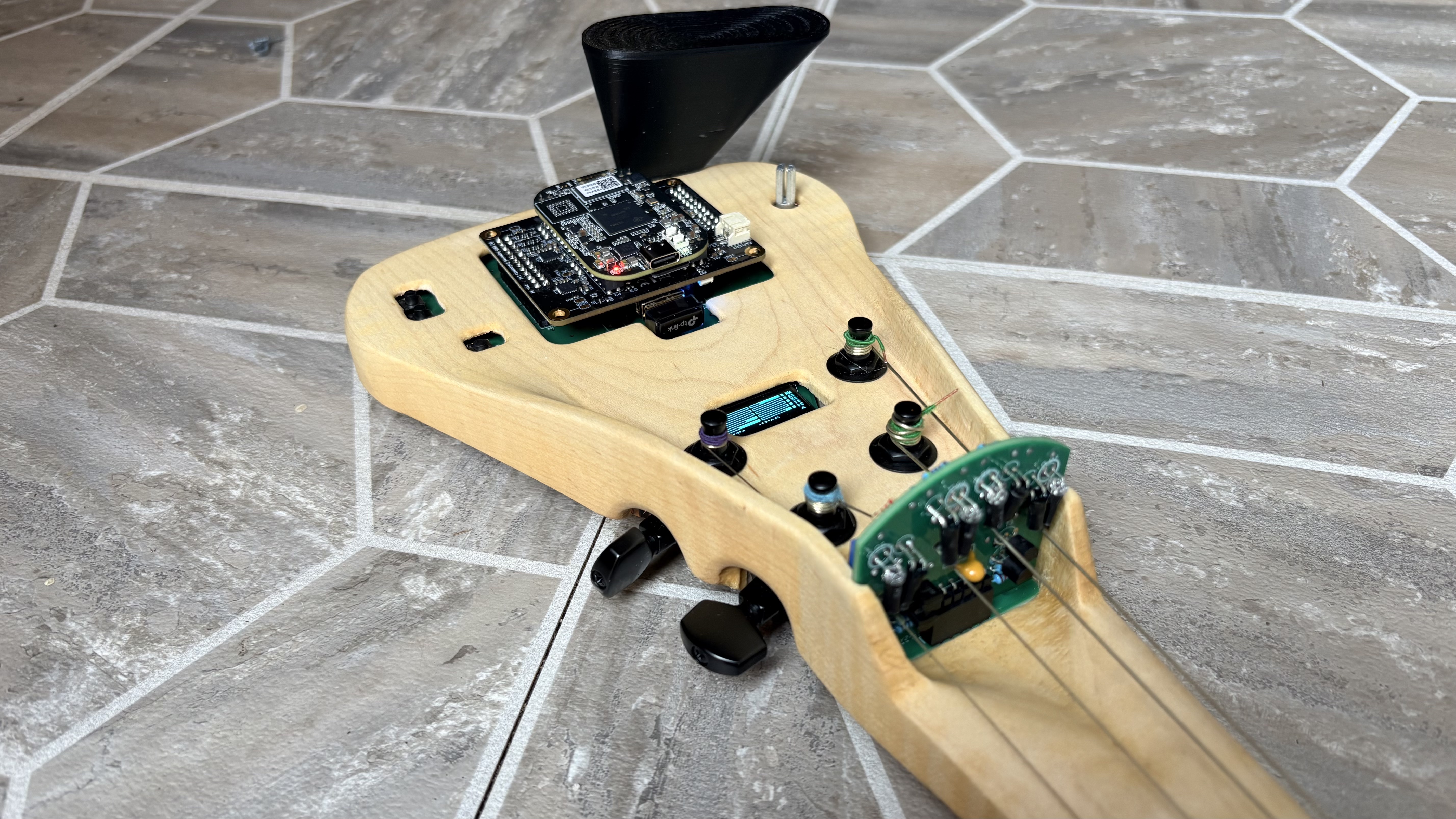
EV 3.5 represents the most significant architectural consolidation in the instrument’s development. Where EV 3 ran four discrete Bela Mini computers—one per string—the 3.5 replaces that distributed stack with a single Bela Gem, a quad-core ARM processor that preserves the one-core-per-string model in a dramatically more integrated package. A redesigned 4-layer PCB with separated analog and digital power domains, dedicated low-noise regulation, and EMI shielding throughout yields a substantially cleaner noise floor.
On the software side, eliminating the four-board UART architecture removes the synchronization complexity and fragile physical interconnect of previous versions, with all processing now unified in a single codebase running on the Gem’s four cores in parallel. Both the browser-based WiFi GUI and the instrument-mounted OLED display have been substantially refined in this version. The OLED now presents a compact heads-up layout—preset number and name, CPU load, and battery voltage across the top, with per-string and main mix VU meters below, including a gain reduction meter that tracks the output limiter. Both interfaces stay in sync bidirectionally: recalling a preset from the hardware buttons updates the GUI automatically, and the OLED reflects the current state at all times via a lock-free pipe from the audio thread.